Mobi
Mobile Prototype

Mobi
A physiotherapy app designed to improve rehab consistency through structure, feedback, and accountability.
iOS Prototype
Role
UX/UI Designer
Duration
10 weeks
Tools
Figma, FigJam, Illustrator, Miro, Notion
Context
Masters of Interaction Design
+4 Team members
Background
Many young adults begin rehabilitation with motivation, but struggle to maintain consistency when exercises become repetitive or progress feels unclear.
Mobi was developed to support independent rehab by making recovery more structured, trackable, and engaging.
PROBLEM
Consistency breaks down outside the clinic
Rehabilitation isn’t difficult — staying consistent is.
Users struggle to stay consistent with rehabilitation outside structured environments.
Unclear progress
No visible feedback makes it hard to stay motivated
Lack of structure
No guided system to follow consistently
No accountability
Recovery feels isolated without support
SOLUTION
A guided path to consistent recovery
A guided rehab application designed to improve consistency through structure, feedback, and support.
Feedback
Structure
Support
DESIGN DECISIONS
What we learned from our users
Key behavioural insights that shaped our design decisions.
RESEARCH INSIGHT
Progress visibility
drives consistency
Users stay engaged when progress is clearly visible over time.
DESIGN RESPONSE
Show progress clearly and celebrate milestones
Low-friction logging builds habits
Simpler interactions increase daily adherence.
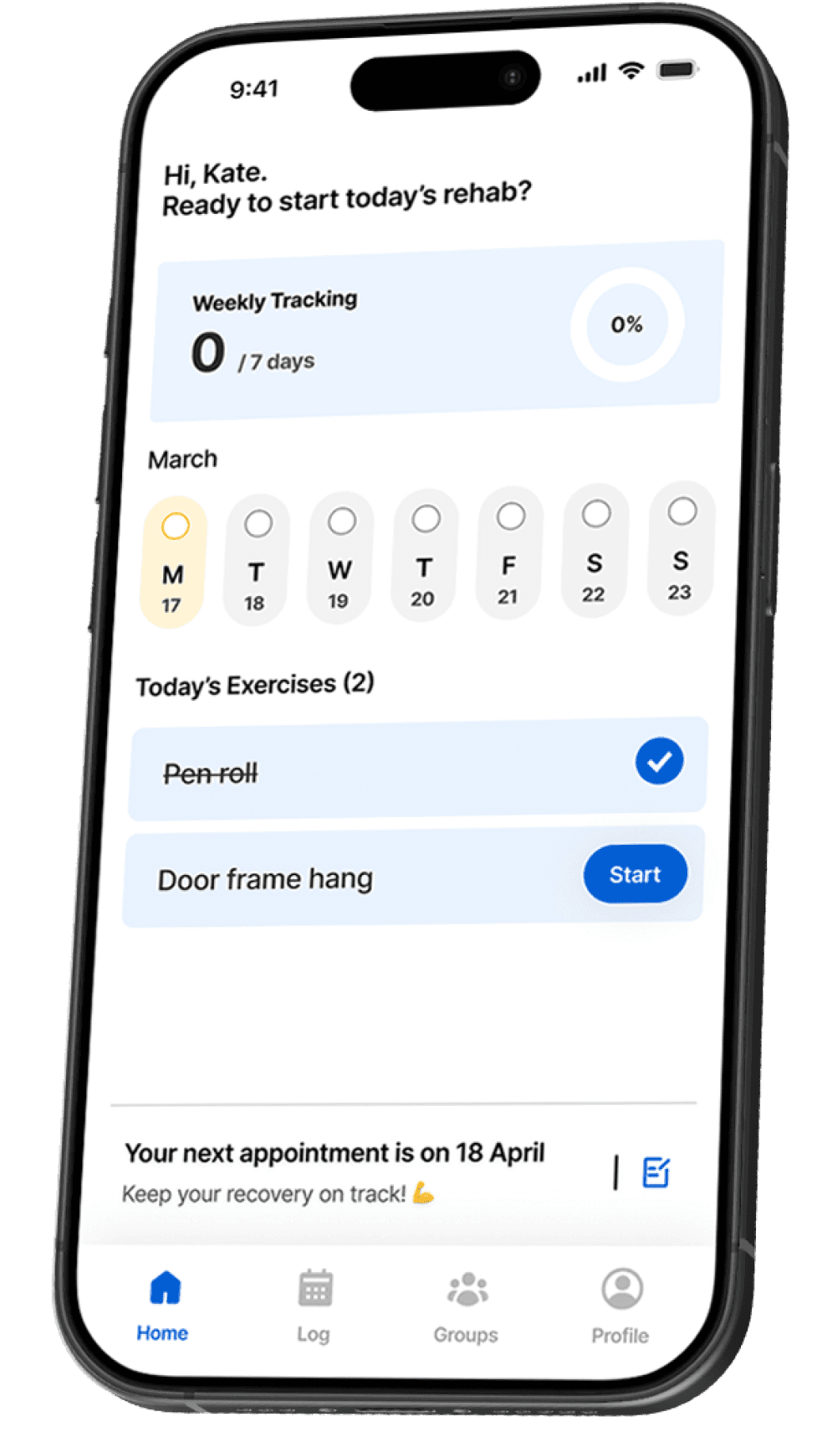
Make exercise tracking quick and lightweight
Social accountability reinforces commitment
Shared progress helps increases follow-through.
Uplifting feedback that keeps users motivated
Structure reduces decision fatigue
Clear routines make it easier to stay consistent.
Use clear routines to help users know what to do next
UNDERSTANDING THE USER
Target users
Designed for independent rehab patients balancing recovery alongside busy daily lives.

Anna Fitzgerald
Post-ACL Surgery | Returning to Sport
Balancing full-time work with recovery, Anna struggles to stay consistent without structure.
She relies on clear progress and accountability to stay on track.
"
I need structure and visibility to stay on track.
''
Key needs
Guided structure
Clear, step-by-step routines to follow consistently
Flexibility scheduling
Rehab that adapts to daily life and energy levels
Visible progress
Clear feedback to track improvement overtime
Shared accountability
Support and motivation through connection with others
MVP FEATURES
The core product features designed to support consistency, feedback and accountability
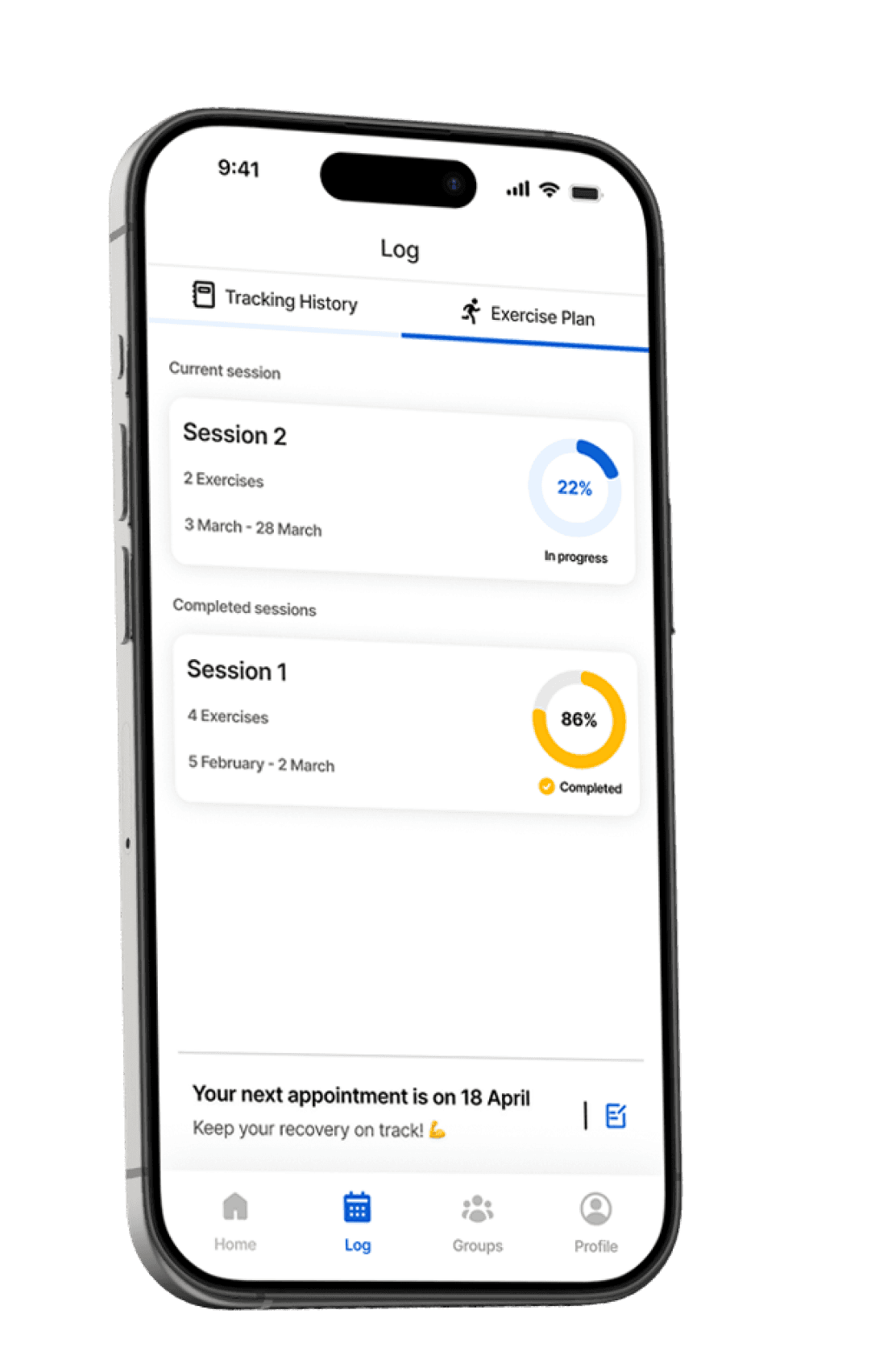
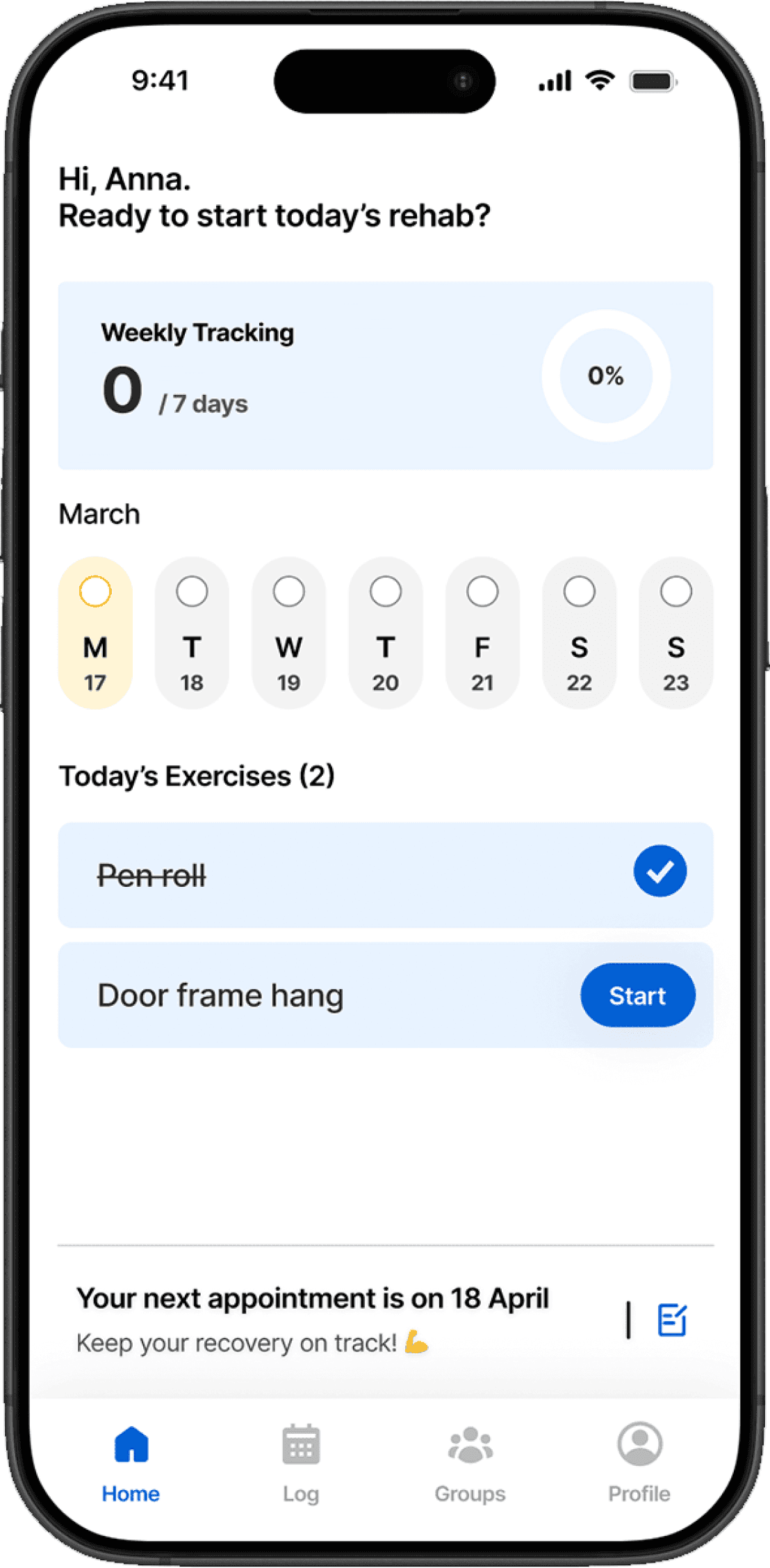
Exercise Logging
One-tap daily logging for exercises, reps, and pain levels
Routine Building
86%
Progress tracking
Milestone-based progress tracking with clear visual feedback over time
Visible Improvement
Community Connections
Shared progress and small accountability groups for peer support
Accountability


CONTRIBUTIONS
End to end UX design
Led the full design process from research and insights to final interactive prototype
User research & insight synthesis
Conducted interviews and research to understand motivation, consistency, and support challenges during self-guided rehab.
Mobile interaction design
Designed key mobile flows including onboarding, session creation, exercise logging, progress tracking, and community features.
Prototyping & usability testing
Built interactive prototypes, tested core flows with users, and refined the experience based on feedback and evaluation.
Outcome & Reflection
Mobi resulted in a high-fidelity rehab app concept that helps independent physiotherapy patients build consistency through guided routines, visible progress, and shared accountability. The project showed me that recovery support is less about adding more features, and more about reducing uncertainty, reinforcing small habits, and helping users feel supported between clinical sessions.
01.
Adherence improves when progress is visible
02.
Confidence grows through structured feedback
03.
Small daily actions compound in recovery
04.
Support systems matter outside clinical settings